
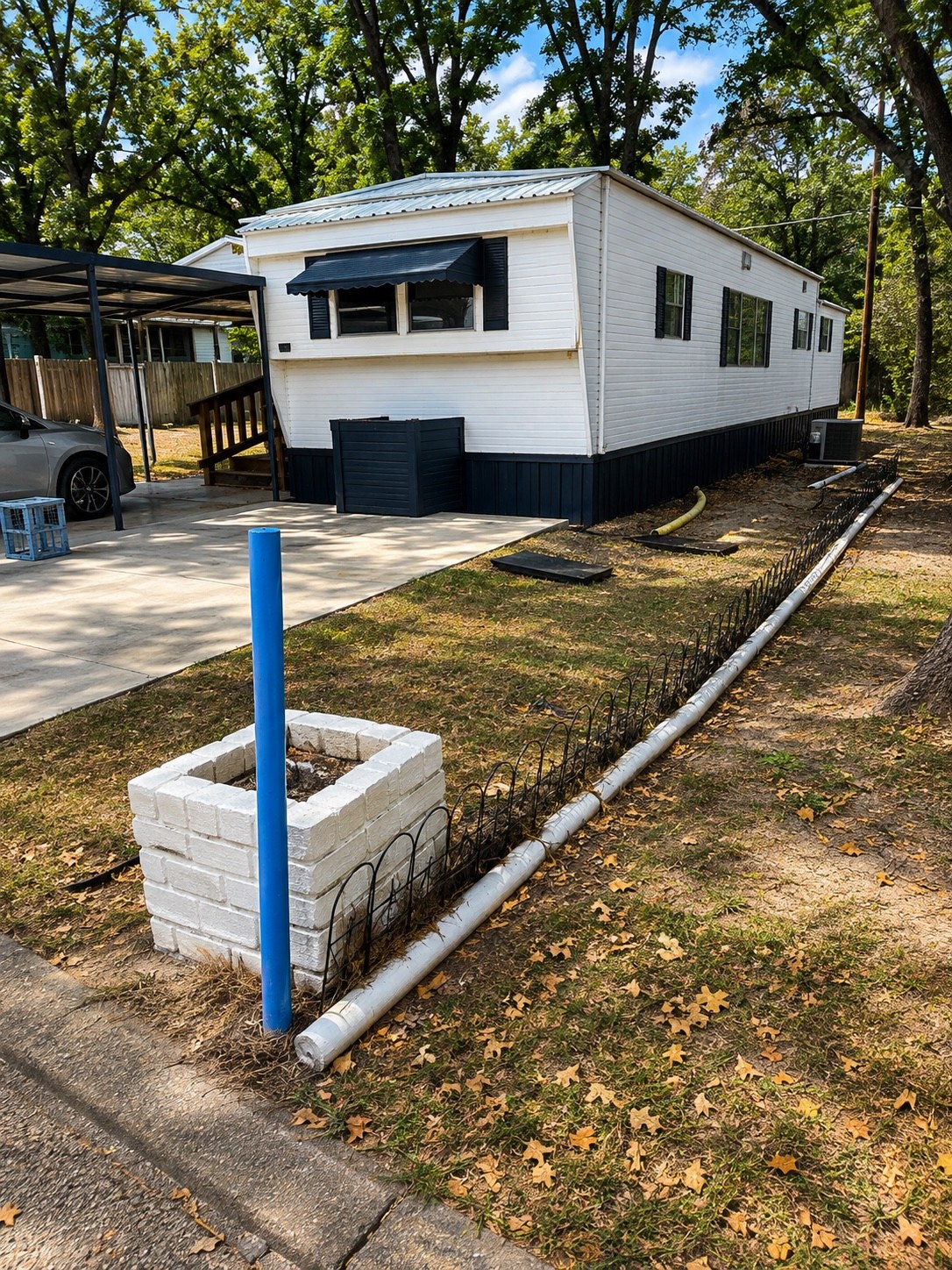
“Now you get your room back.”
That is what a mother said to her son when her family came to purchase our first home at Country Oaks in Fort Worth.
They were wearing baseball shirts. Their son had a game that day, but they skipped it to come get their home.
I had spent weeks thinking about renovation costs, listing prices, showings, and whether I had made the right decision. When the sale finally happened, I expected the biggest feeling to come from getting paid.
There was relief in that. I had accomplished something I set out to do.
But looking at that family’s faces—and hearing those words—meant more to me than I had expected.
To explain why, I have to go back to a Facebook Marketplace listing.
A listing, a course, and a first step
I had just purchased a mentorship program and worked through a crash course on buying and selling manufactured homes. I was learning what to look for, how to evaluate repairs, and how to work with contractors.
Then I started searching for an opportunity to put those lessons into practice.
That is when I found the Country Oaks home on Facebook Marketplace. I reached out to the seller and asked the questions I had been learning to ask: What ownership paperwork did she have? What work did the home need? What should I know before coming out?
After that conversation, I arranged to see it.
My original plan was to get the home under contract and connect it with another buyer. During the visit, I learned the seller was also an investor. We had even learned through people connected to the same mentorship circle.
We talked through the property and negotiated an initial agreement. But once I got home and did more research, I realized I needed to take another look at the numbers.
The home needed a substantial makeover. The floors, bathroom, and damaged walls all needed attention. The price had to leave room for that work.
Why I decided to renovate it myself
Buying a home, fixing it up, and reselling it was something I had wanted to do for a long time. I had planned to build up more money before taking that step, but this home made me consider starting sooner.
Before committing, I brought out two contractors for quotes. Their estimates were very different. The lower labor quote made me think the project could work if I negotiated the purchase price down far enough and kept the renovation within budget.
That gave me the confidence to go back to the seller.
We negotiated again and eventually reached an agreement that allowed me to purchase the home myself. The plan had changed: I was going to renovate it and see the project through.
I had a picture in my head of what it could become. Now I had to turn that picture into something real.
Making the vision real
The contractors started within a few days of the purchase. They told me the work would take two weeks, and they finished within that time.
For a first project, that was something I appreciated. I had heard plenty of contractor horror stories, but these gentlemen showed up and got to work. They sent photos and videos so I could see the progress without being there all day.
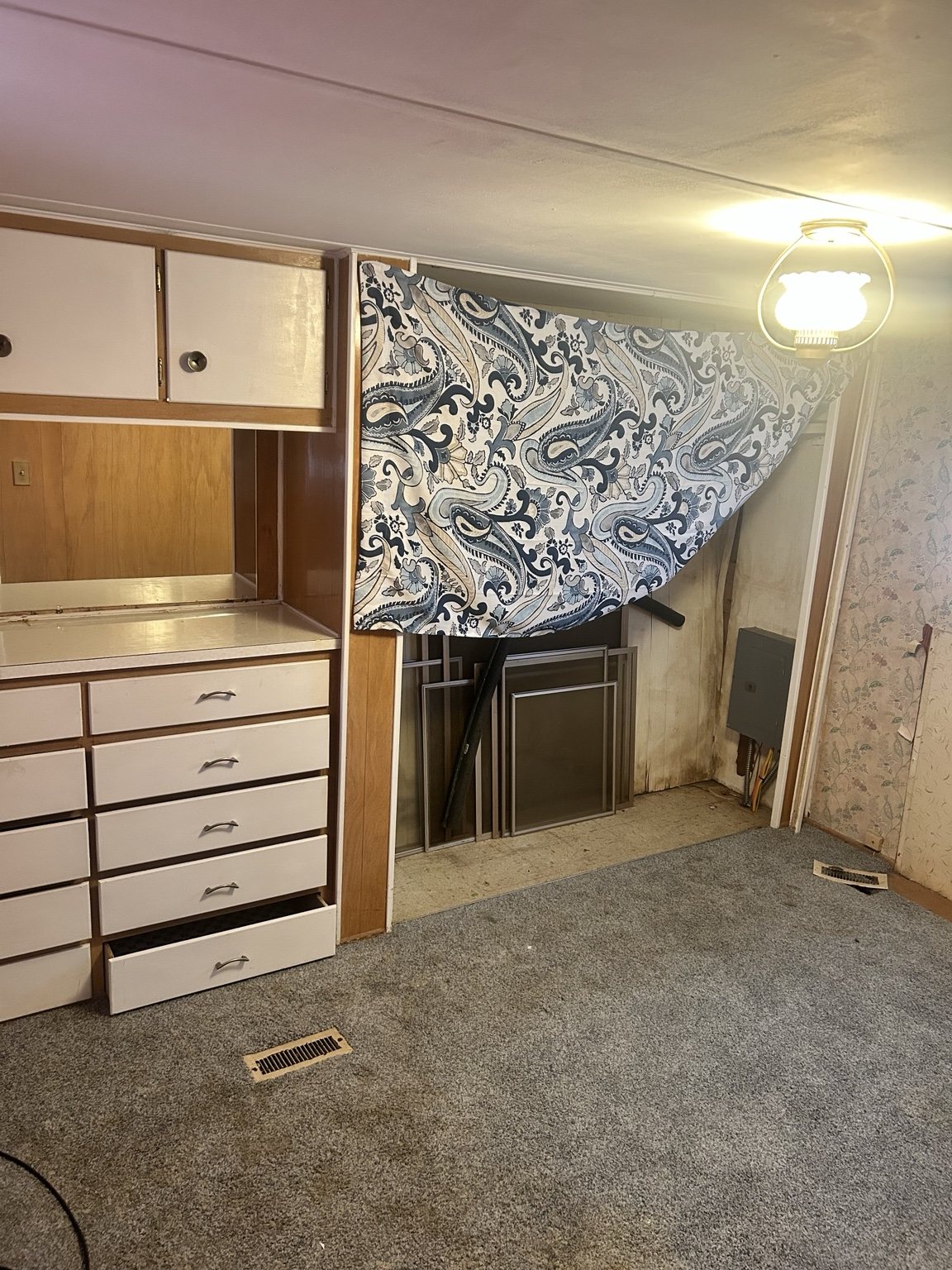
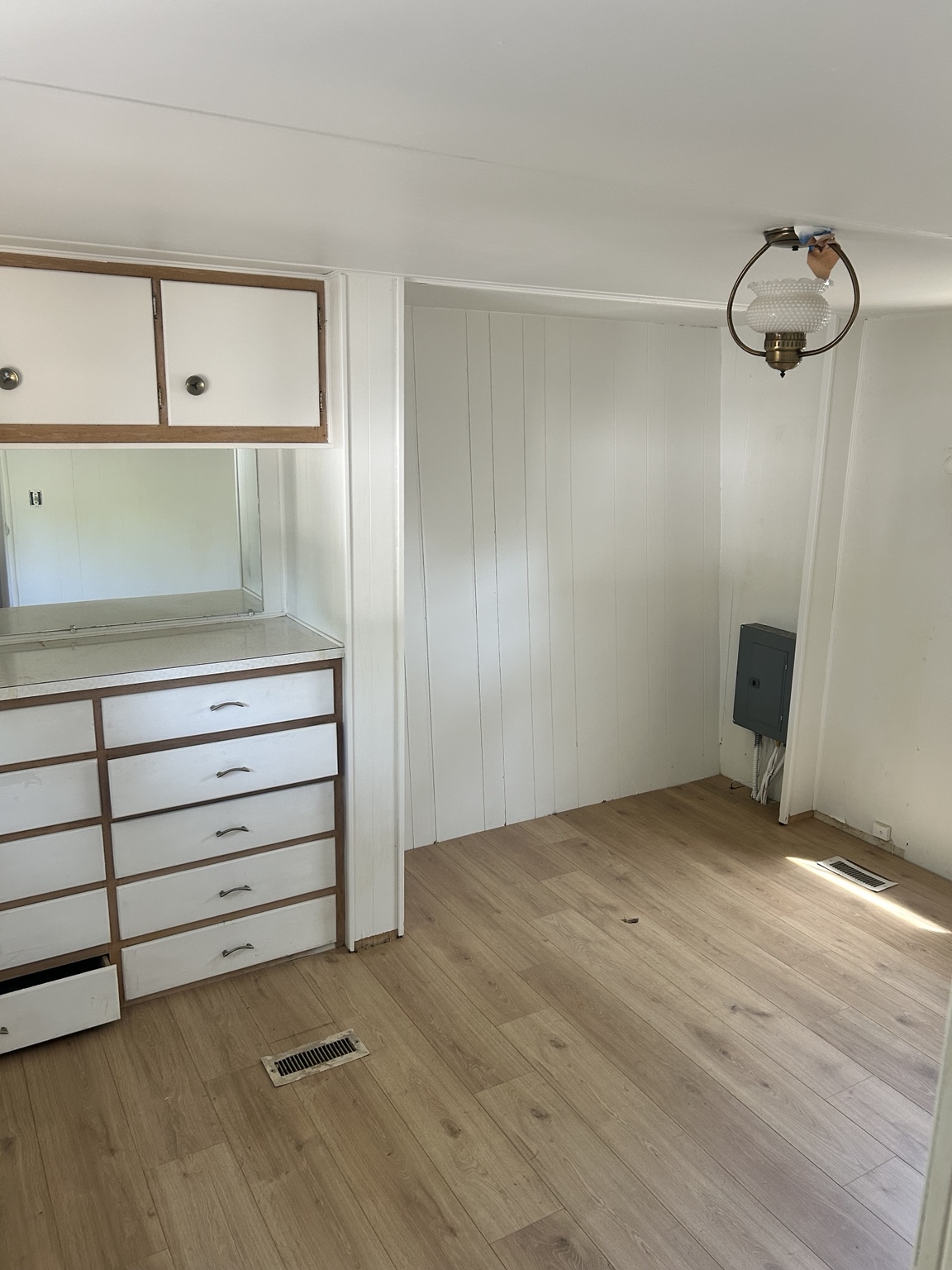
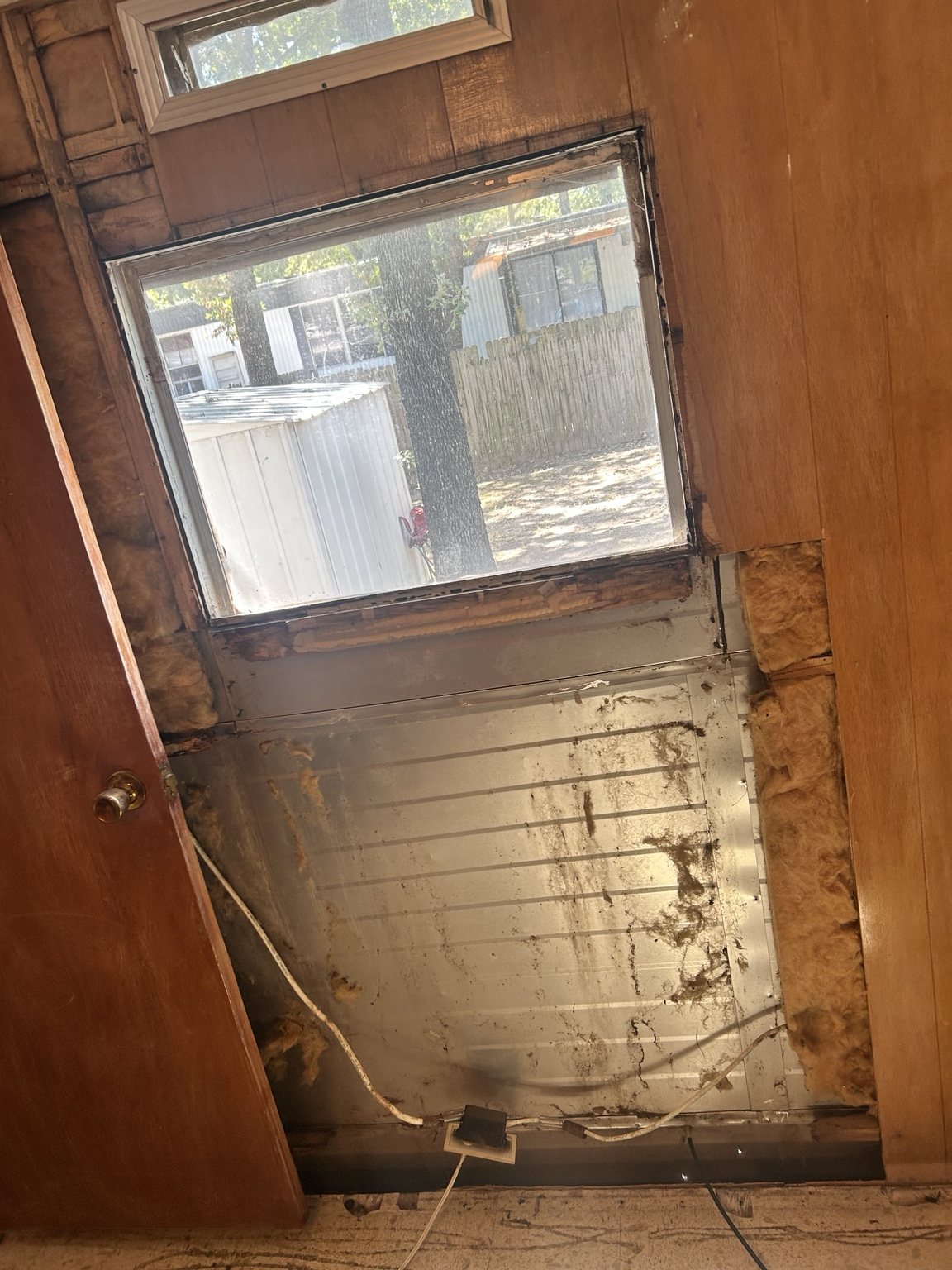
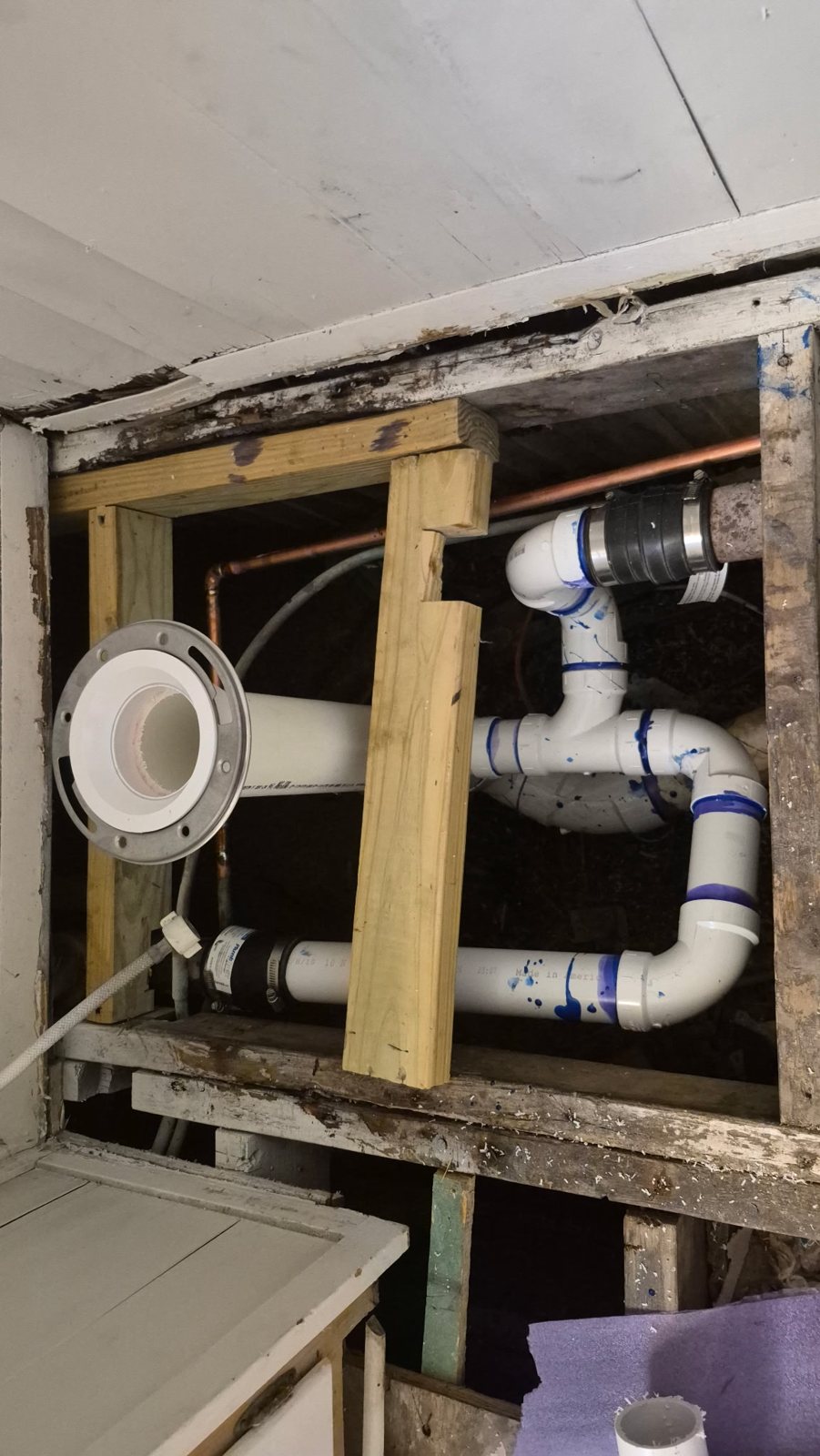
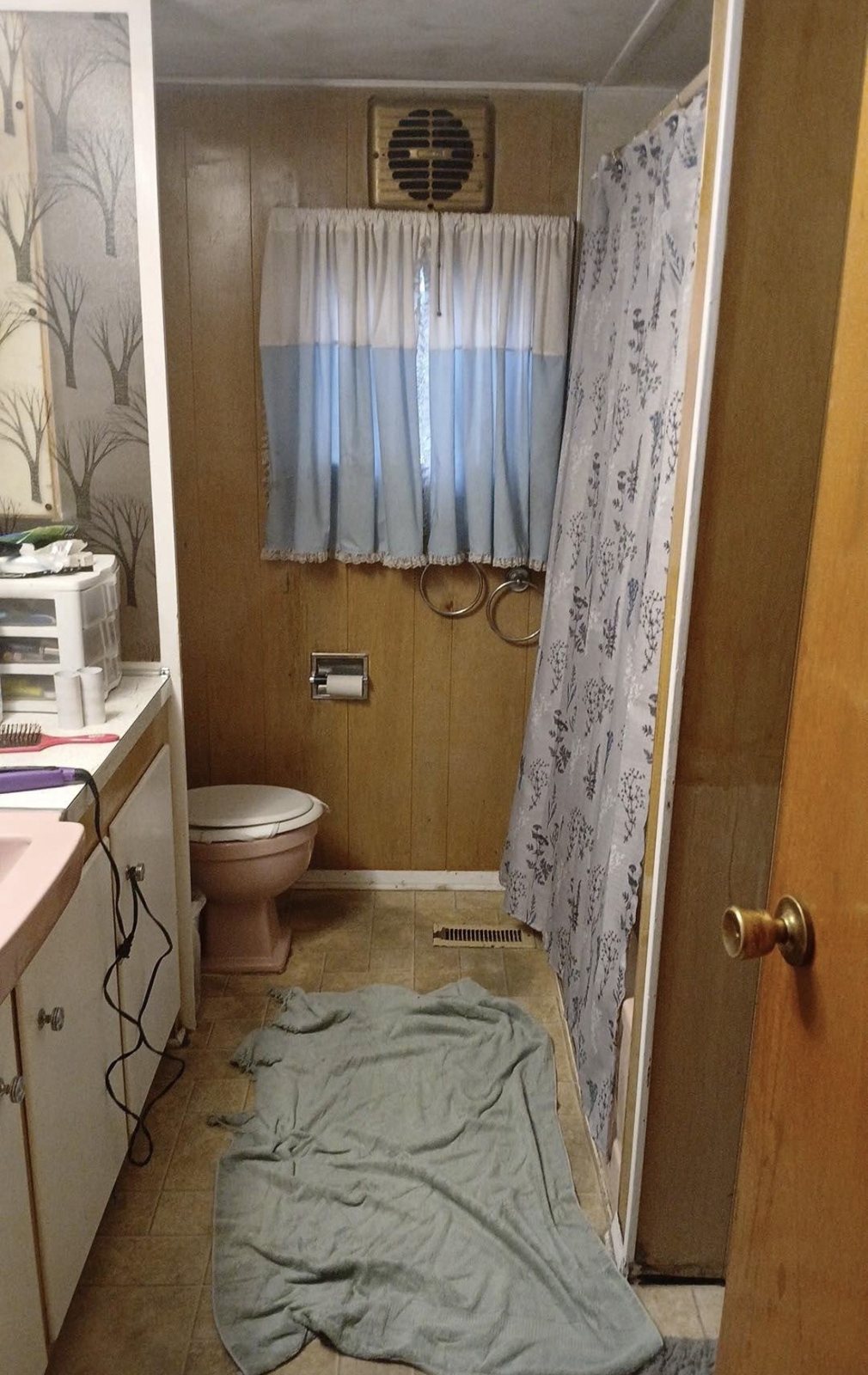
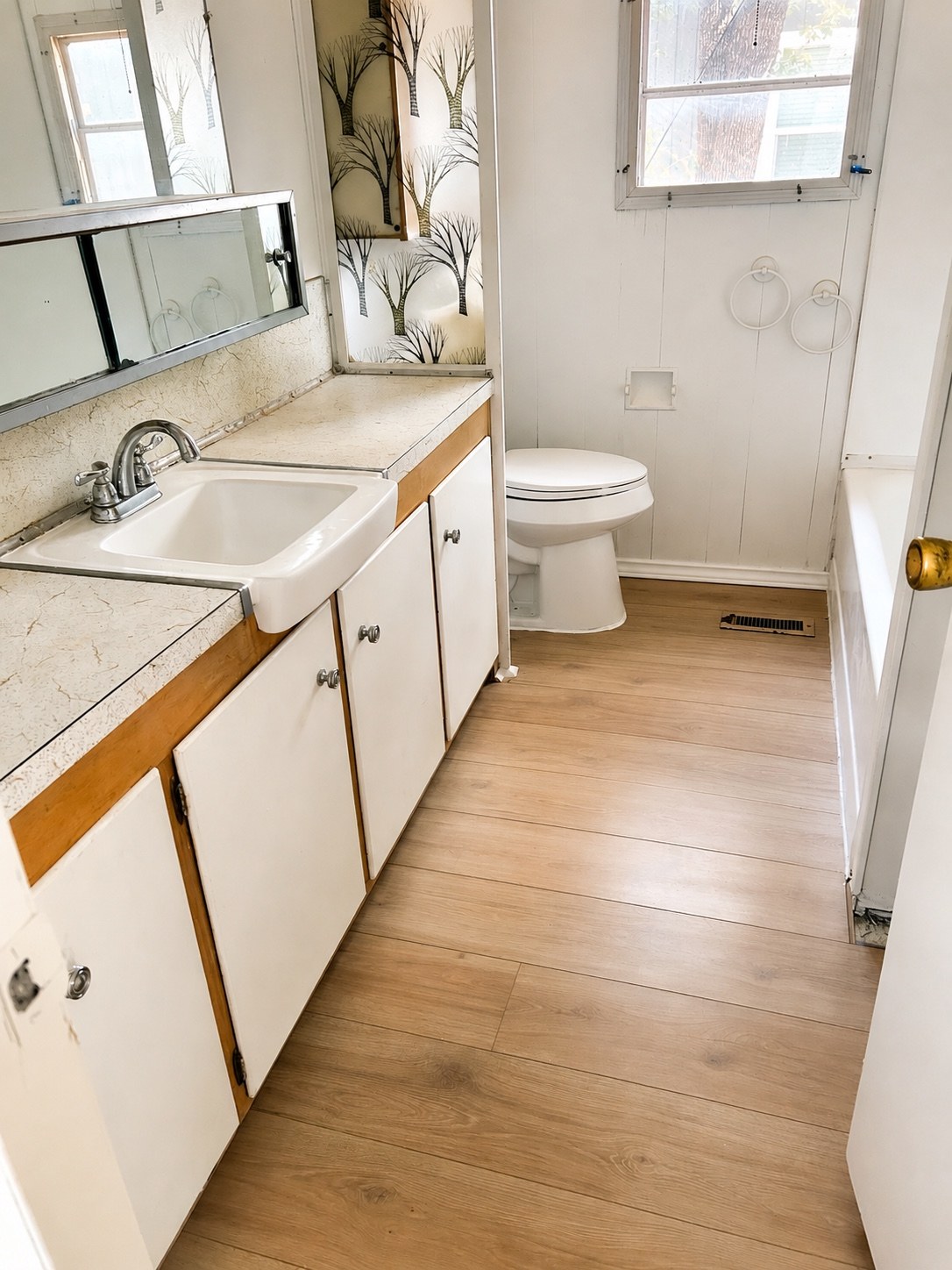
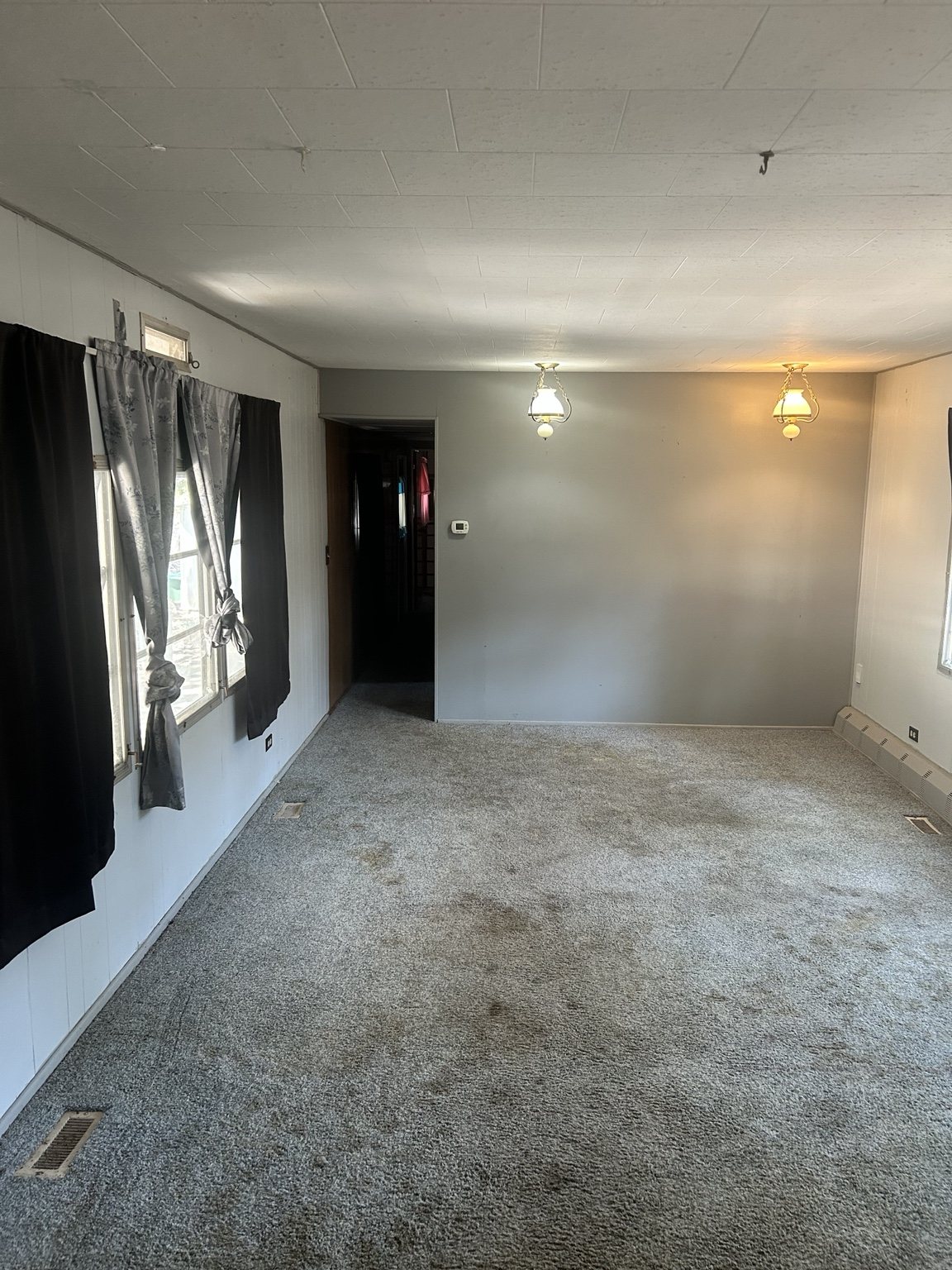
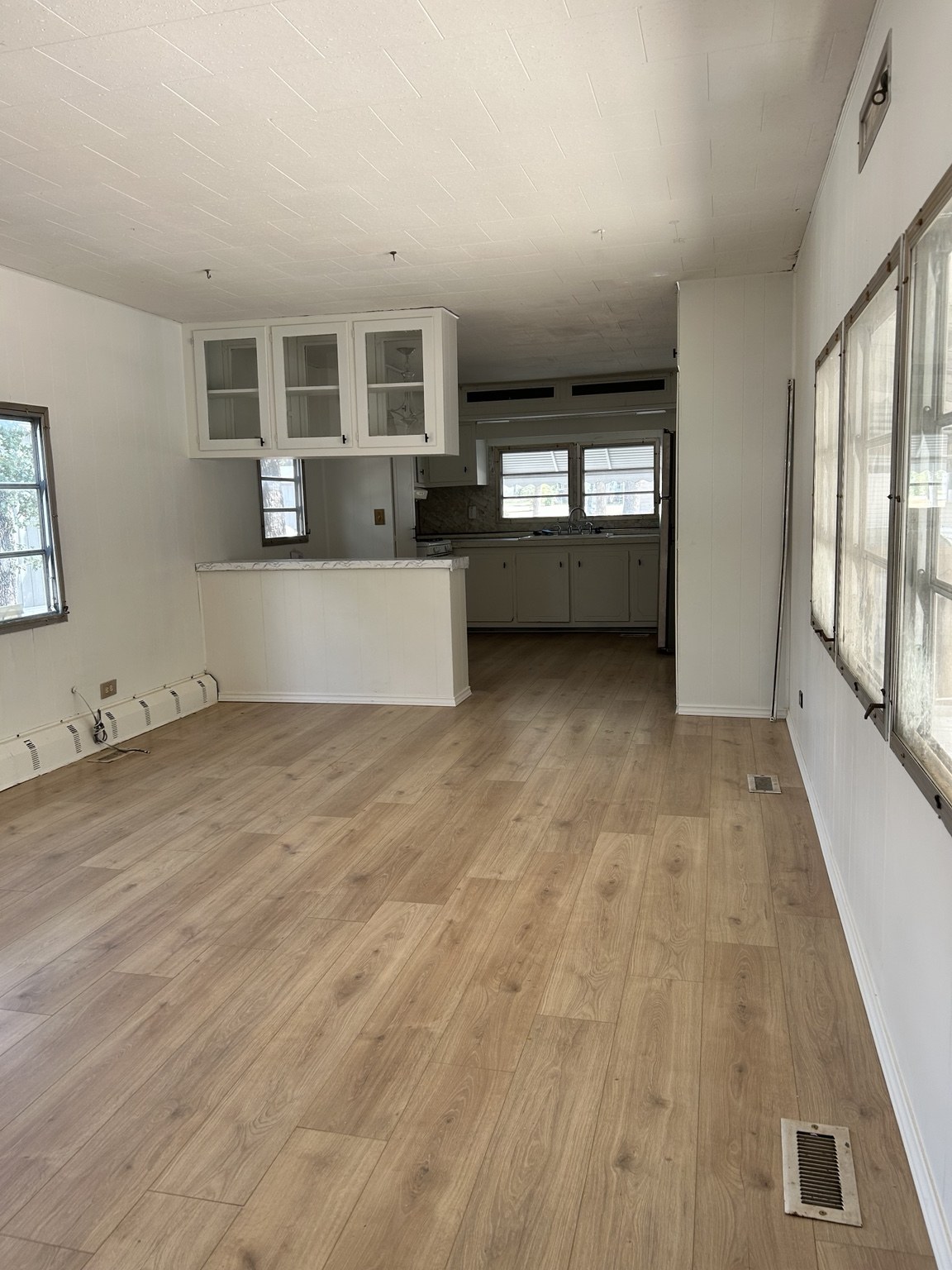
We removed the old flooring and installed wood-look flooring throughout the home. Damaged walls were repaired, including a back-room wall that needed extensive replacement. The bathroom needed a new toilet and plumbing work, including new pipes.
The interior was painted white. The bathtub and sink were refinished, and the showerhead was replaced.
Outside, we kept the existing white exterior and pressure-washed it, along with the two sheds. Black paint on the skirting, carport posts, and exterior window covering helped pull the look together.
I checked in periodically, but the contractors handled the renovation. Afterward, I came through to clean the stove, clear out and wipe down the refrigerator, and finish cleaning the inside.
Before the work began, I had used ChatGPT to help explore the look I wanted. When I saw the finished home, the white interior and wood-look floors worked together just as I had imagined.
I was very, very pleased with it.
The lesson my budget taught me
The biggest renovation challenge was the cost.
I had underestimated materials badly. They ended up costing more than twice what I had anticipated. The plumbing and wall repairs added expenses I had not properly accounted for. Then there were all the smaller purchases: paint, bathroom supplies, wood, flooring, and finishing materials.
Each purchase had a reason. Together, they changed the economics of the project.
My lesson was to build a more complete budget, allow for surprises, and trust the numbers before buying. Wanting a project to work does not make the costs fit.
By the time the renovation was finished, I needed a higher asking price than I had originally planned. That led to the next part of the education: finding a buyer.
A nice home that wasn’t the right size for everyone
I listed the home on Facebook Marketplace, OfferUp, and Craigslist. There was interest right away. People asked questions, scheduled visits, and walked through.
But one piece of feedback kept coming back: they liked the home, but it was too small for them.
It was a two-bedroom, one-bath home with approximately 720 square feet. I could improve its condition and presentation, but I could not change whether that amount of space suited someone’s family.
I adjusted the price over time and kept marketing. I offered self-guided walkthroughs and promoted the home through my social pages. After speaking with my mentor, I also explored a payment option alongside a cash sale.
Some conversations went nowhere. One buyer made an offer I accepted, gave me his contact information, and then stopped responding.
I knew a sale could take time, but I still had moments when I wondered whether I had made the wrong move. I kept showing up, following up, and trying to find the right fit.
One of the most useful things I did was simple: I put a for-sale sign outside the home.
That sign brought calls from people who had driven through the community—including the family who eventually purchased it.
When one deal fell through, another moved forward
Near the end, I had several interested buyers at once. One cash buyer planned to move the home to land he owned. We discussed the sale and the steps involved in moving it, and I expected that transaction to go forward.
Then his plans changed.
He told me someone had offered to buy his land. He decided to pursue that opportunity and backed out of purchasing the home.
Meanwhile, the family who had seen the sign had already toured the home and expressed interest. I followed up to see whether they still wanted to move forward.
They did.
They came the next day, made their down payment, and we completed the sale using a payment arrangement.
After all the listings, conversations, walkthroughs, and changes in direction, I had finally sold my first home.
The transformation
What stayed with me
At the beginning, I thought a lot about making money. I wanted to complete a deal, make the business work, and prove to myself that I could do this.
So yes, getting paid brought relief.
But the moment I keep coming back to is that mother looking at her son and telling him he would get his room back.
I do not know every detail of their story, and I do not need to. I could see how excited they were about their home. That was enough to make the work feel different to me.
I had taken a chance on a property that needed attention. We repaired it, cleaned it up, and made it into a place this family was excited to purchase.
Something that started as a thought in my head had become part of somebody else’s real life.
That is what made me feel like I had accomplished something meaningful. I learned expensive lessons, had doubts, and made adjustments along the way. But I also got to see what the finished work meant to the people buying it.
Our first sale at IJ’s Wheel Estates taught me how much I still had to learn about this business.
It also gave me a reason to keep going that I could not fully understand from a course, a spreadsheet, or a listing.
“Now you get your room back.”
That is the part I will remember.
Looking for your next home?
Tell us what you’re looking for so our team can follow up about manufactured homes that may fit your needs in Dallas–Fort Worth.
Tell Us What You’re Looking For
Considering selling yours? Tell us about your property.

A low price is only part of the story.
Before you buy, learn what to look beyond the asking price for. Our free guide, Cheap Doesn’t Mean Affordable, walks through 10 must-do steps to help you make a more informed manufactured-home purchase.
Get the Free Buyer GuideView the sold Country Oaks property and its full photo gallery · More IJ Stories